The hormonal transition in late reproductive years through menopause is individualized and can be prolonged. Tailored treatments such as those used in acupuncture may provide significant benefits. The research is clear that acupuncture may offer relief from some of the most common symptoms of changing hormones.
.
Acupuncture works by:
- Targeting purinergic receptors. These receptors have been investigated as potential therapeutic targets in a broad range of disorders, including depression and anxiety, sleep disturbances, osteoporosis, endocrine disorders, cardiovascular, and neurodegenerative disease.
- Influencing the release of beta-endorphins.7These neurochemicals are thought to be involved in the pathophysiology of vasomotor symptoms like hotflashes
- Affecting cortisol, cortisol metabolites, and DHEA levels.10Cortisol levels tend to increase following menopause, contributing to changes in mood, metabolism, bone density, and cognitive decline.
Acupuncture for perimenopause and menopause has been shown to: 
- Regulate cortisol/ Stress levels.
- Improve sleep.
- Ease joint pain.
- Clear brain fog.
- Cool hotflashes/ nightsweats.
- Support metabolism, weight gain.
- Decrease anxiety, depression, panic attacks.
- Improve energy.
- Regulate menstruation.
- Increase Libido
- Ease vaginal dryness
- Return the body to homeostasis.
- Decrease inflammation
- Promote detoxification for balanced hormones
- And treat many more symptoms!
Research by condition:
Vasomotor symptoms
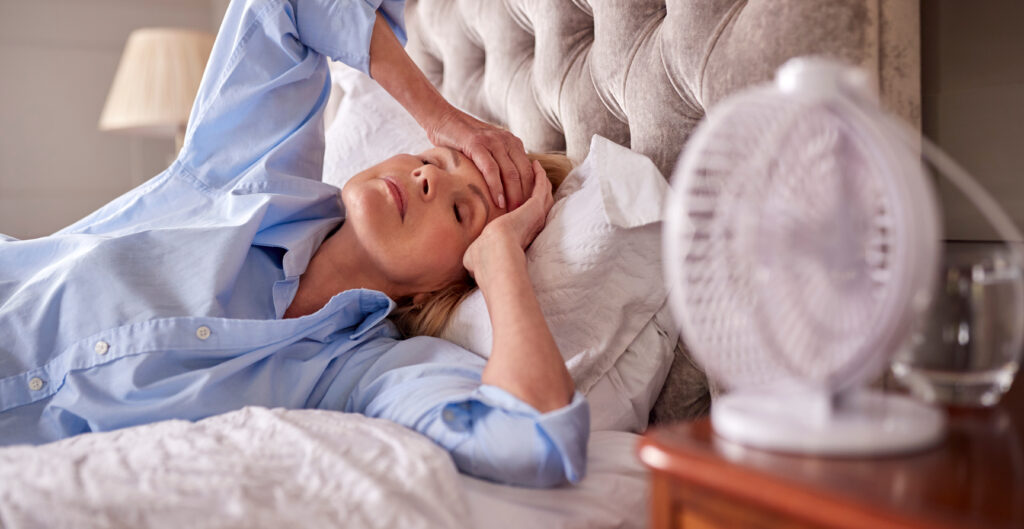
Vasomotor symptoms (VMS), including hot flashes and night sweats, are among the most common issues menopausal women experience. They affect approximately 70% of women in Western cultures. VMS are also one of the best-studied areas with regard to acupuncture and menopause.
A 2009 review by Alfhaily and Ewies5 concluded that the majority of studies on acupuncture for VMS reported 50% reductions in hot flashes that lasted for up to six months. A 2015 meta-analysis by Chiu et al.6 supports these results. It reviewed 12 studies with a total 869 participants, finding that acupuncture significantly reduced hot flash frequency and severity. Acupuncture improved menopause-related psychological, somatic, and urogenital symptoms, as well as overall quality of life.
Depression and Anxiety
Many menopausal women also suffer from mood disorders such as depression and anxiety. This is another area where acupuncture may help.
A 2013 review by Sniezek and Siddiqui7 included six trials with a total of 605 female subjects aged 18–71. Of these studies, four were on depression (with three focusing on major depressive disorder), one was on anxiety, and one was on both conditions. One of the studies involved menopausal women with depression and VMS.
The authors of the study concluded that although the quality of the evidence was mixed, acupuncture was “promising” as a therapy for menopausal women with depression. They went on to say: “At this time, it is reasonable to use acupuncture as an adjunctive therapy for treating depression in postmenopausal women who have vasomotor symptoms.”
An earlier 2007 review by Pilkington et al.8 focused on acupuncture for anxiety. It included 12 controlled trials, 10 if which were RCTs. All of the trials reported positive outcomes.
Sleep disturbance and Insomnia
A 2015 review by Berezza et al.9 included 12 studies on acupuncture for sleep disorders in post- menopausal women. The studies involved a wide range of treatment protocols, interventions, and durations. Overall, 75% reported improvements in sleep complaints following acupuncture treatment.
Cognitive decline and Alzheimer’s disease
The risk of cognitive decline, including Alzheimer’s disease (AD), also increases significantly following menopause. A 2019 systematic review and meta-analysis by Huang et al.12 found that acupuncture provided some benefits. It included 13 studies comparing acupuncture with medication alone. The results showed that acupuncture had positive effects on Mini Mental State Examination scores, Ability of Daily Living Scale scores, AD Assessment Scale-Cognition scores, and a high clinical efficacy rate.
How often should I get treatment?
The recommendations for frequency of acupuncture treatment vary by the severity of the condition and the length of time it has persisted. Symptoms should begin to improve within 3 treatments with 12 sessions showing maximum results,
General recommendations for perimenopause through menopause are weekly for 4 weeks then then move to every 2 weeks or as needed.
For more chronic or severe symptoms: 2-4 times a week for 2 weeks and then re-evaluation.
References:
- 1. Jane FM, Davis SR. A Practitioner’s Toolkit for Managing the Menopause. Climacteric. 2014; 17(5): p.564-579.
2.Hillard T, Abernathy K, Hamoda H, et al. British Menopause Society Management of the Menopause Sixth Edition 2017.
- 3. Thurston RC, Joffe H. Vasomotor Symptoms and Menopause: Findings from the Study of Women’s Health across the Nation. Obstetrics and Gynecology Clinics of North America. 2011; 38(3): p. 489-501.
- 4. Hess R, Olshansky E, Ness R, et al. Pregnancy and Birth History Influence Women’s Experience of Menopause. Menopause. 2008;15(3): p. 435-441.6.
- 5. Alfhaily F, Ewies AAA. Acupuncture in managing menopausal symptoms: hope or mirage?. Climacteric. 2007; 10(5): p. 371-380.
- 6. Chiu HY, Pan CH, Shyu YK, Han BC, Tsai PS. Effects of acupuncture on menopause-related symptoms and quality of life in women in natural menopause: a meta-analysis of randomized controlled trials. Menopause. 2015 Feb; 22(2): p. 234-244.
- 7. Sniezek DP, Siddiqui IJ. Acupuncture for Treating Anxiety and Depression in Women: A Clinical Systematic Review. Medical Acupuncture. 2013; 25(3): p.164-172.
- 8. Pilkington K, Kirkwood G, Rampes H, Cummings M, Richardson J. Acupuncture for anxiety and anxiety disorders – a systematic literature review. Acupuncture in Medicine. 2007; 25(1-2): p.1-10.
- 9. Bezerra AG, Pires GN, Andersen ML, Tufik S, Hachul H. Acupuncture to Treat Sleep Disorders in Postmenopausal Women: A Systematic Review. Evidence-Based Complementary and Alternative Medicine. 2015; 2015:563236.
- 10. Pan H, Jin R, Li M, Liu Z, Xie Q, Wang P. The Effectiveness of Acupuncture for Osteoporosis: A Systematic Review and Meta-Analysis. The American Journal of Chinese Medicine. 2018; 46(3): p.489-513.
- 11. Xu G, Xiao Q, Zhou J, et al. Acupuncture and moxibustion for primary osteoporosis: An overview of systematic review. Medicine (Baltimore). 2020; 99(9): e19334.
- 12. Huang, Q., Luo, D., Chen, L. et al. Effectiveness of Acupuncture for Alzheimer’s Disease: An Updated Systematic Review and Meta-analysis. Current Medical Science. 2019; 39: p.500–511.
- 13. Burnstock G. Purinergic Signalling: Therapeutic Developments. Frontiers in Pharmacology. 2017;8:661. Published 2017 Sep 25. doi:10.3389/fphar.2017.00661
- 14. Wang LH, Huang W, Wei D, et al. Mechanisms of Acupuncture Therapy for Simple Obesity: An Evidence-Based Review of Clinical and Animal Studies on Simple Obesity. Evidence-Based Complementary and Alternative Medicine. 2019; 2019:5796381.
- 15. Huang F, Zhao S, Qiu M, et al. Acupuncture for primary osteoporosis: A network meta-analysis of randomized controlled trials protocol. [published correction appears in Medicine (Baltimore). 2019 May;98(21): e15898]. Medicine (Baltimore). 2019;98(15):e15108.
- 16. Shan Y, Wang JJ, Wang ZQ, et al. Neuronal Specificity of Acupuncture in Alzheimer’s Disease and Mild Cognitive Impairment Patients: A Functional MRI Study. Evidence-Based Complementary and Alternative Medicine. 2018; 2018: 7619197
- 17. Manson JE, Chlebowski RT, Stefanick ML, et al. Menopausal hormone therapy and health outcomes during the intervention and extended poststopping phases of the Women’s Health Initiative randomized trials. JAMA. 2013; 310(13): p.1353-1368.
- 18. Linde, K., Streng, A., Hoppe, A., Jürgens, S., Weidenhammer, W., & Melchart, D. (2006). The programme for the evaluation of patient care with acupuncture (PEP-Ac) – a project sponsored by ten German social health insurance funds. Acupuncture in Medicine, 24(Suppl), 25–32. https://doi.org/10.113610.1136/aim.24.Suppl.25